
Victoria and I are 76% done with the Trail of Tears. Our journey now turns northwest after heading southwest for days.
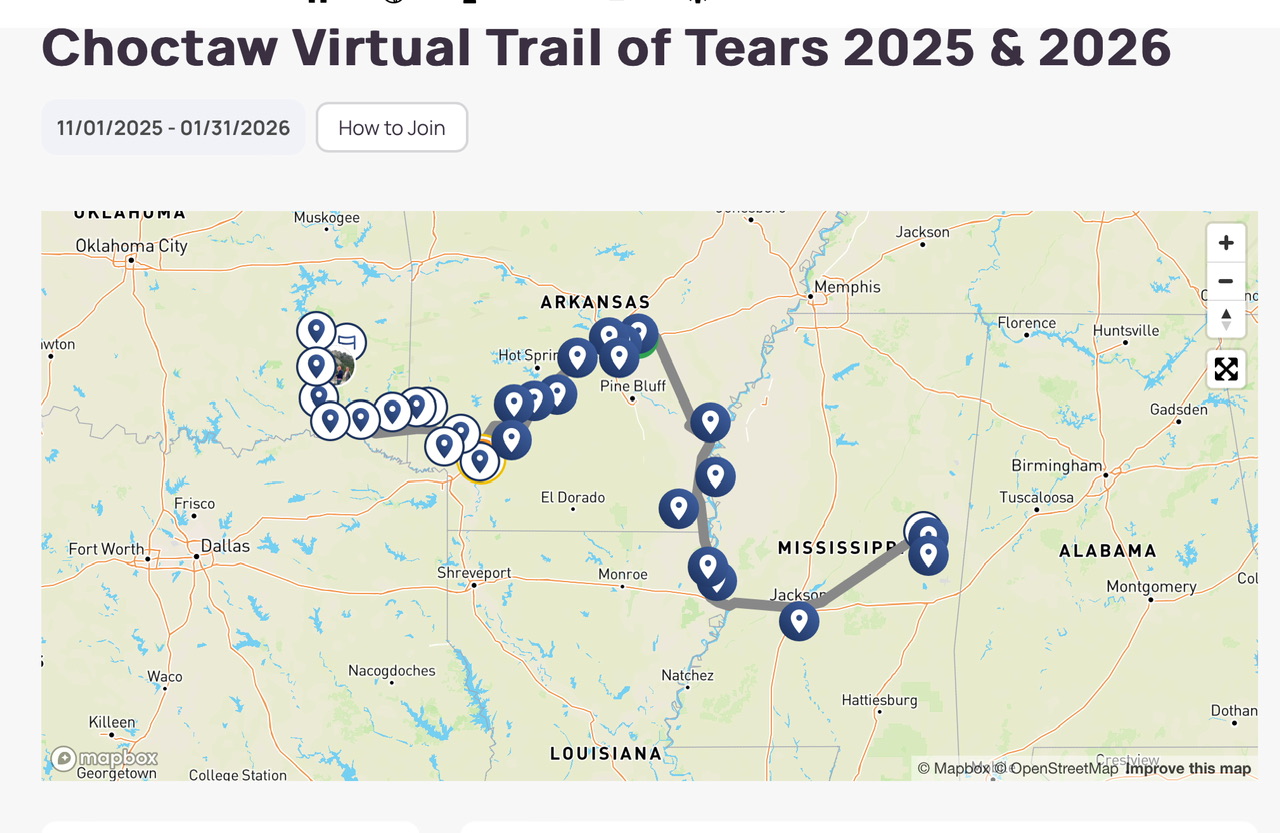
We’ve had many river crossings as of late, some by ferry, some not. Crossings would not have been pleasant.
I’ve asked if there is a way to find out which removal our ancestors were on, perhaps a list of names. No one has answered, so I may never know.


A trail is a path or track, often unpaved, that winds through natural landscapes, offering a means to explore the outdoors. Trails can vary widely in purpose, terrain, and difficulty, ranging from gentle walking paths in local parks to rugged mountain routes for experienced hikers. They serve as vital conduits for outdoor recreation, connecting people with nature while promoting physical and mental well-being. Beyond recreation, trails often hold historical or cultural significance, tracing the steps of ancient civilizations, trade routes, or migration paths. Modern trails are carefully designed to minimize environmental impact, using sustainable practices to preserve ecosystems. They also play a role in conservation, providing access for scientists and volunteers to monitor wildlife and habitats. Trails foster community, bringing together individuals with shared interests in hiking, biking, or horseback riding. Whether for solitude, adventure, or education, trails offer a unique way to experience the world, blending physical challenge with the beauty of the natural environment. Their maintenance and preservation are essential to ensure future generations can continue to enjoy their benefits
A trail is a path or track, often unpaved, that winds through natural landscapes, offering a means to explore the outdoors. Trails can vary widely in purpose, from hiking and biking to horseback riding or simply walking, each designed to accommodate different activities and skill levels. They serve as vital connections to nature, allowing individuals to immerse themselves in forests, mountains, deserts, or coastal areas while minimizing environmental impact when properly managed. Trails also hold cultural and historical significance, often tracing routes used by indigenous peoples, settlers, or traders, preserving stories of the past. Modern trail systems are frequently maintained by government agencies, conservation groups, or volunteers, ensuring accessibility and sustainability. Beyond recreation, trails promote physical and mental well-being, encouraging exercise and reducing stress through exposure to natural environments. They foster a sense of community among outdoor enthusiasts and provide economic benefits to local areas through tourism. Whether a short nature walk or a long-distance trek, trails offer a unique way to experience the world, blending adventure, education, and conservation in a single journey